
Look up a US men's 9 at Nike and you get EU 42.5. At Adidas it is EU 42 2/3, at Vans EU 42, at Merrell EU 43. Same US size, four different EU numbers, and none of them is a typo. Here is where the fractions come from, what they mean for your size, and how to buy by EU size without guessing.
One US Size, Five EU Labels
We compared the size charts of the 25 brands in our database that print EU sizes for men. For a US men's 9, they print five different EU sizes:
EU size for US men's 9 | Brands |
|---|---|
42 | Vans, Puma, Skechers, Reebok, Mizuno, KEEN, UGG, Dr. Martens, Birkenstock, Golden Goose, Steve Madden |
42.5 | Nike, New Balance, ASICS, Brooks, Converse, On, Saucony, Under Armour |
42 2/3 | Adidas, Hoka, Salomon |
43 | Merrell, Timberland |
42–43 | Crocs |
The spread is a full EU size. So an EU number only means something together with the brand that printed it.
Where the Fractions Come From
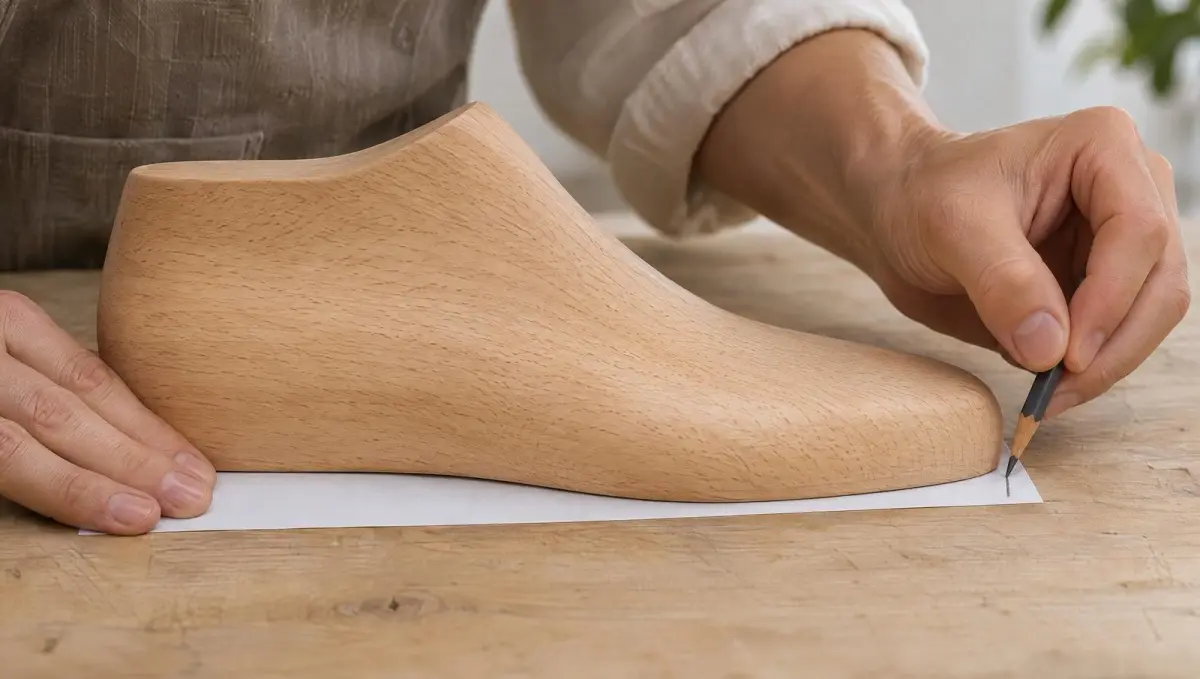
EU sizes count in Paris points. One Paris point is 2/3 of a centimeter, and it measures the length of the shoe's last, the form the shoe is built on, not your foot. EU 42 stands for 28 cm of last. The foot that fits a generic EU 42 measures about 26.2 cm.
US and UK half sizes step in a different unit: 1/6 inch, about 4.2 mm. That is roughly two thirds of an EU size. Brands that build on US or UK half sizes and convert them exactly land on thirds. You can see it in Adidas's men's chart, where every half size adds exactly 2/3:
US 8: EU 41 1/3
US 8.5: EU 42
US 9: EU 42 2/3
US 9.5: EU 43 1/3
US 10: EU 44
Most brands round these thirds to halves. That is why Nike's EU steps look uneven for the same sizes: 41, 42, 42.5, 43, 44. Birkenstock goes further and uses whole EU sizes only, so one EU size covers two US sizes: US 9 and US 9.5 are both EU 42. Crocs prints two EU sizes per pair, such as 42–43.
What It Means When You Buy by EU Size
The same EU number can be a different US size depending on the brand. EU 42 is a US men's 8.5 at Nike, Adidas and New Balance, but a US men's 9 at Vans, Puma and Skechers. If you take your EU size from one brand to another, you can be half a size off before the shoe has even arrived.
A few rules that hold up:
Use the chart of the brand you are buying. Look up your size in that brand's own table instead of carrying an EU number over from another brand. Our brand size comparison puts two brands side by side.
Treat thirds as normal. If you wear EU 42.5 at Nike, Adidas's EU 42 2/3 is the same US men's 9. Neither is a "bigger" size, they are two labels for the same shoe size.
Expect ranges on generic charts. A generic chart cannot know the brand, so where one US size sits between two EU sizes it shows both: a US men's 8.5 is EU 41–42 in our EU to US shoe size chart. Rounding that to one number would hide the uncertainty.
Measure once, convert from there. Your foot length in centimeters is the one number every brand works from. Start with foot length to shoe size, then read the EU size from the brand's chart.
For single sizes, the quick answers are on pages like EU 42 in US sizes and US 9 in EU sizes. How Nike, Adidas and New Balance differ beyond EU is in Nike vs Adidas vs New Balance sizing.
The Short Version
EU sizes count shoe length in Paris points of 2/3 cm, not foot length.
A US half size is about 2/3 of an EU size, so exact conversions land on thirds: Adidas, Hoka and Salomon print them, most brands round to halves.
The same EU number can mean a different US size at another brand. Always convert with the chart of the brand you are buying.
Where every number on this site comes from is listed on our methodology page.