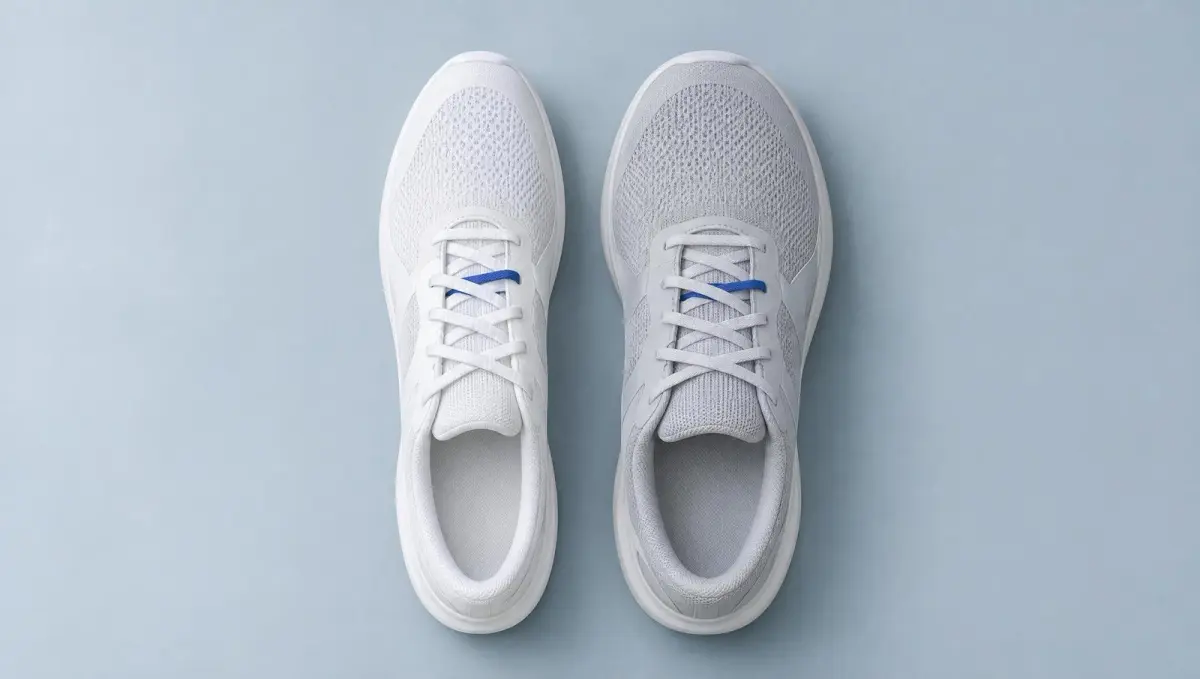
Most fit problems get blamed on length. But if the sides of your foot press against the shoe while your toes still have room, a bigger size will not fix it: you need more width, not more length. Here is how to tell, how to measure your foot width at home, and which width to look for.
Five Signs Your Shoes Are Too Narrow
Pressure across the ball of the foot. The widest part of your foot rubs or aches after a short walk.
A squeezed little toe. Redness, a corn or a blister on the outside of the little toe points to a toe box that is too narrow.
The upper bulges over the sole. Look down while standing. If the material at the ball of your foot pushes out past the edge of the sole, the shoe is too narrow.
Your foot spills over the insole. Take the insole out and stand on it. If the sides of your foot hang over its edges, the shoe's footprint is narrower than yours.
Tingling or numb toes. A squeezed forefoot can press on nerves. Stop wearing the pair, and if it keeps happening, see a podiatrist.
Size Up or Go Wide?
Going up half a size mostly adds length. In New Balance's men's chart, half a size up adds only 1 to 2 mm of foot width, while one width step (from D to 2E, for example) adds 3 to 4 mm. And if your heel already slips, a longer shoe makes that worse. So when the sides hurt but your toes have room, a wider fit in your usual size is the better fix. Our guide on choosing between two sizes covers the rest.
How to Measure Your Foot Width at Home
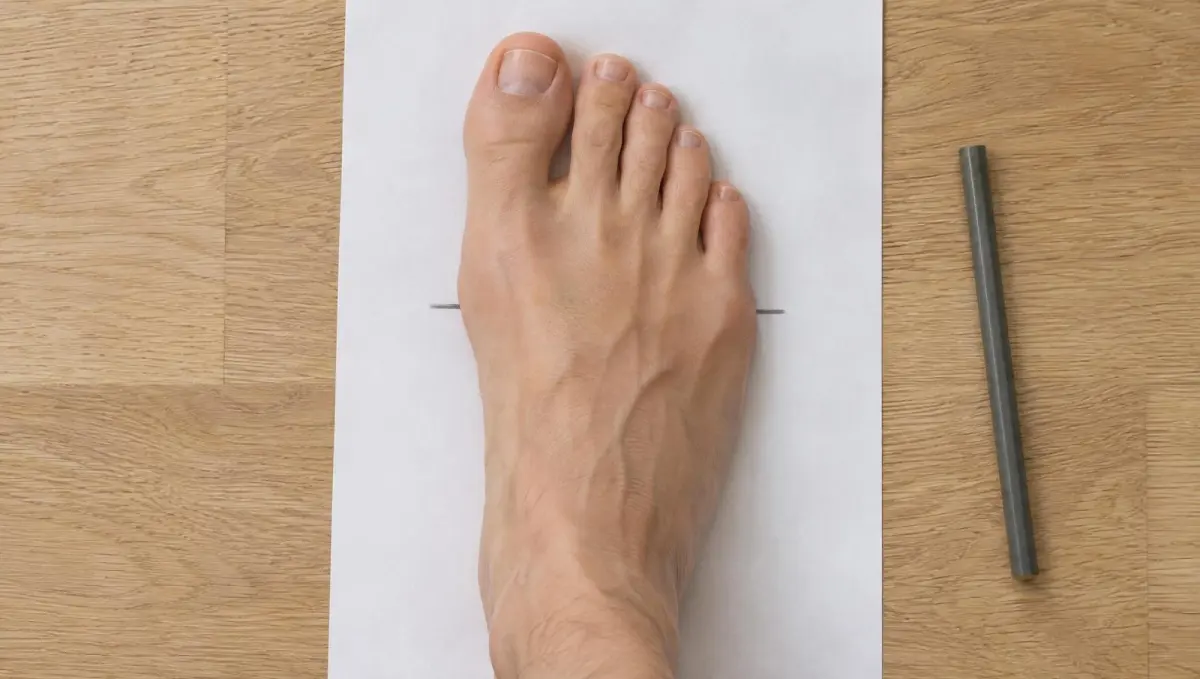
Put a sheet of paper on a hard floor and stand on it with your full weight, wearing the socks you plan to wear with the shoes.
Mark the widest points on both sides of your forefoot, across the ball of the foot.
Measure the distance between the marks in centimeters. Do both feet and use the wider one.
Compare the number with the width chart for your size.
For length, see how to measure your foot, then convert foot length to a shoe size.
What Your Width Number Means
New Balance publishes the flat foot width for every size and width. For a US men's 9:
Width | Letter | Foot width |
|---|---|---|
Narrow | B | 10.0 cm |
Medium | D | 10.4 cm |
Wide | 2E | 10.7 cm |
Extra wide | 4E | 11.0 cm |
The steps are small. If your foot measures 10.6 cm at a men's 9, you sit between D and 2E; for a fleshy foot, take the wider one. Every size, for men and women, is in our shoe width chart.
Men's and Women's Widths Use Different Letters
The same letter means a different width depending on gender. At New Balance, Brooks and ASICS:
Narrow: men's B, women's 2A
Medium: men's D, women's B
Wide: men's 2E, women's D
Extra wide: men's 4E, women's 2E
So a women's D is already a wide shoe, while a men's D is the standard width. This is also why many women with wide feet do well in men's shoes: at New Balance, a women's 9 in extra wide 2E measures 9.7 cm, the same as a men's 7.5 in narrow B, and a men's 7.5 in standard D measures 10.0 cm. To find your men's size, use women's to men's shoe size.
W, XW, EW: Widths Without Letters
Not every brand uses letters. Stride Rite sizes kids' shoes as M, W and XW (medium, wide, extra wide). Merrell marks its wide styles with a W, and Nike sells Regular, Wide and Extra Wide on selected models. On most labels, EW stands for extra wide. None of these labels is standardized, so check which width the brand's own chart puts behind them.
Which Brands Make Wide Shoes
Widths by letter: New Balance and Brooks (men's B to 4E, women's 2A to 2E), ASICS (men's D to 4E, women's 2A to 2E), Mizuno (men's D and 2E, women's B and D).
Wide on selected models: Nike, Under Armour (4E on select men's models), Saucony, Salomon, Puma and Merrell.
No width options: Dr. Martens and Golden Goose. Steve Madden makes standard width only.
Widths change from model to model, so check the product page before you order. The full brand overview, with sources, is in the shoe width chart.
The Short Version
If the sides hurt but your toes have room, go wider, not longer.
Measure your foot width standing, use the wider foot, and compare it with the chart for your size.
A women's D is already a wide fit; a men's D is standard.